
The ruling rejected Safdi’s claim that his admissions during Shin Bet (Israel Security Agency) and Israel Police questioning had been extracted through improper pressure.
The Nazareth District Court convicted Tahrir Safdi, a resident of Mas’ada in the Golan Heights, of espionage for Iran after finding that, over several years, he passed sensitive information on IDF activity in the North, including tank movements and missile impact locations, through a Syria-based contact he suspected was linked to Iranian and Syrian security bodies.
The ruling, issued by Judge Moran Margalit on Wednesday and distributed on Thursday, rejected Safdi’s claim that his admissions during Shin Bet and Israel Police questioning had been extracted through improper pressure, and set arguments on sentencing for April 15.
According to the amended indictment recited in the ruling, Safdi was in contact with Hossam Zidan, a Syrian resident described as a correspondent for the Iranian outlet Al-Alam, whom Safdi said he suspected was operating on behalf of the “Palestine branch” of Iran’s Quds Force.
The court said that the connection stemmed from Safdi’s father’s longstanding relationship with Zidan and that even after Safdi began to suspect the contact was not merely journalistic, he continued transmitting information.
The court detailed allegations that began in 2019, when Safdi and his father photographed missile fall sites in the Golan and a military tank, and continued into 2023 and 2024. During the war, the ruling said, Safdi was asked to report on tank movements in the north and on missile impacts, and in one episode, passed along information about 21 tanks being transported through his village in September 2024 and another five near Tiberias in October. The ruling said he also relayed reports about missile fire in the Tiberias area and sent along images of military forces.

Safdi denied the charge and argued that a key statement – that he believed the Syrian journalist might be working with Iranian or Syrian security services – had been obtained through psychological pressure and interrogation tactics.
But Margalit found the prosecution had proved that Safdi’s statements were given “freely and voluntarily,” and wrote that the evidence showed “to the required degree and beyond” that he acted with full awareness that his conduct could harm state security. The judge also dismissed the defense’s argument that the activity was journalistic, saying that if that had truly been the case, there would have been no reason to conceal the relationship with Zidan.
String of Iran-linked espionage charges seen in Israel
The ruling lands amid an accelerating stream of Iran-linked espionage prosecutions in Israel. Just on Wednesday, prosecutors filed an indictment in Tel Aviv Juvenile District Court against a 14-year-old accused of carrying out paid surveillance and sabotage-related assignments for hostile actors while suspecting they were Iranian, including graffiti missions and filming around central Israeli sites.
That was not an isolated filing. On Tuesday, publication was cleared for an indictment against two brothers from the Jerusalem area accused of maintaining contact with an Iranian agent, passing information and content in exchange for cryptocurrency, with prosecutors alleging that at least some of these acts were carried out while they understood they were dealing with a hostile actor.
Other recent cases have followed a similar arc. Last week, a reservist soldier who had served in Iron Dome was indicted on allegations that he passed sensitive military information to an Iranian handler, while Israeli authorities warned again that enemy agents were using social media and encrypted messaging apps to recruit Israelis for intelligence, espionage, and even terrorist assignments. Over the past two years, dozens of Israelis have been charged in Iran-linked espionage cases.
Safdi’s case, however, stands out because it has now moved beyond arrest and indictment into a judicial finding on the merits. In practical terms, the conviction gives prosecutors a rare courtroom-tested result in a field where many of the newer Iran-linked cases are still at the indictment stage. This underscores the extent to which wartime reporting on troop movement and impact sites is being treated by the courts not as peripheral conduct, but as an intelligence-gathering activity capable of directly harming state security.
What remains unresolved is the separate status of Safdi’s father, who featured prominently in the factual narrative underlying the case, but was not the defendant in this ruling. On the material before the court, the son has now been convicted; sentencing is next.
NEUESTE BEITRÄGE
- 1
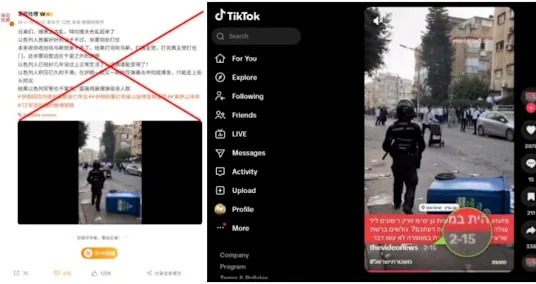
 Video of clashes over purported conscription orders misrepresented as anti-war protest in Israel29.03.2026
 - 2At UN climate conference, some activists and scientists want more talk on reforming agriculture21.11.2025
- 3The most effective method to Guarantee Thorough Inclusion in Senior Protection.19.10.2023
- 4Independence from the rat race for Recent college grads: Systems and Tips01.01.1
- 5Factbox-China's crewed lunar programme eyes astronaut landing by 203002.04.2026



Ähnliche Artikel
- Novartis to build manufacturing hub in North Carolina, creating 700 jobs19.11.2025
- 6 Popular Ladies' Aromas On the planet22.09.2023
- Why this Iranian island looks like Mars after it rains17.12.2025
- NATO official says members often aren't buying weapons together, and it's a mistake29.03.2026
- CDC pauses dozens of types of lab testing during evaluation and in wake of downsizing01.04.2026
- 6 Web-based Course Stages for Successful Learning and Educating06.06.2024
- Miss 'Stranger Things' already? Here's how you can get your Upside Down fix in 2026 with spinoffs, games and more02.01.2026
- Dolly Parton misses Dollywood event due to 'a few health challenges' after skipping honorary Oscars19.11.2025
- German police 'cleared path for fascists with batons,' protesters say30.11.2025
- Hot peppers sent him to the ER. Two years later, a ‘ghost bill’ arrived.19.12.2025